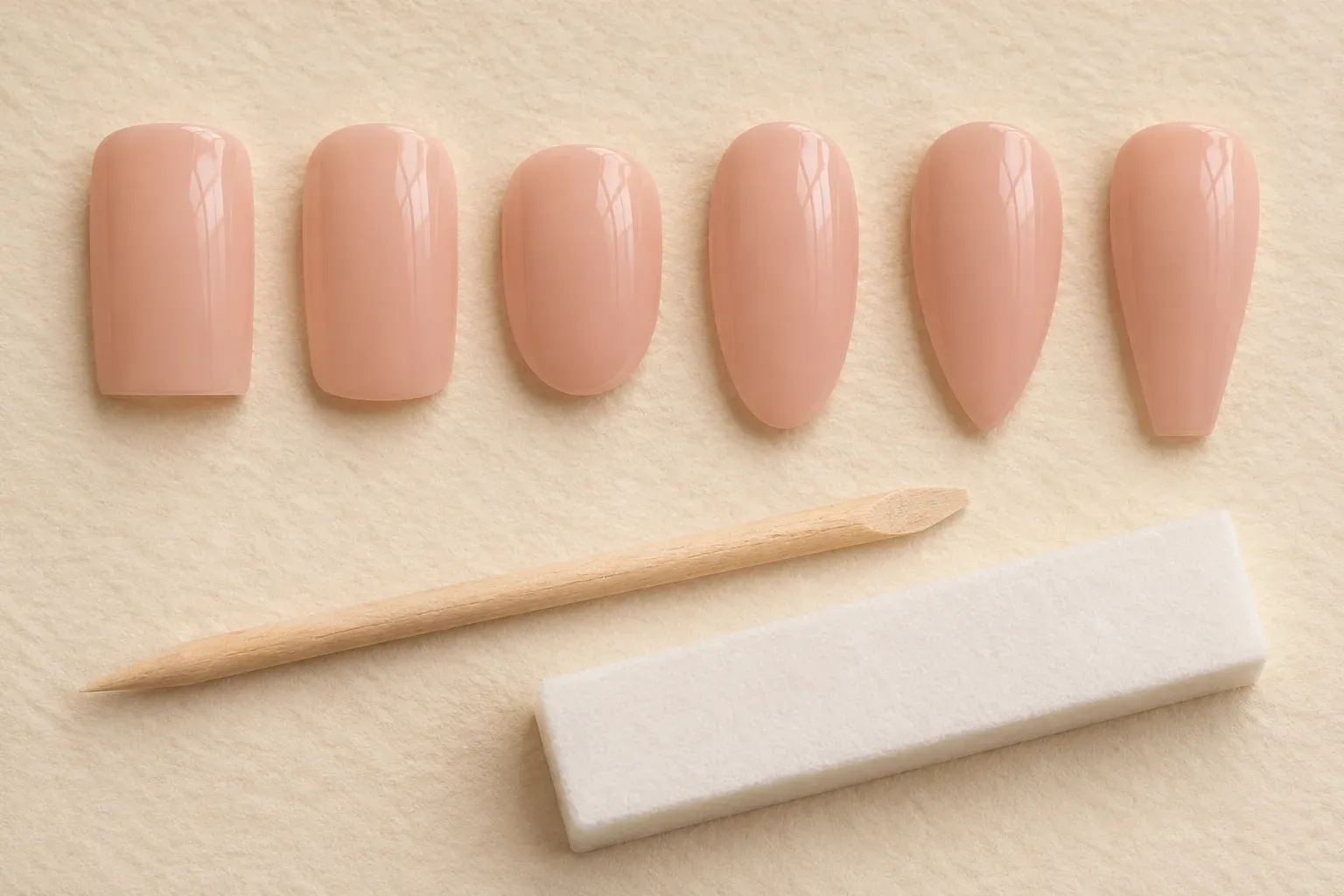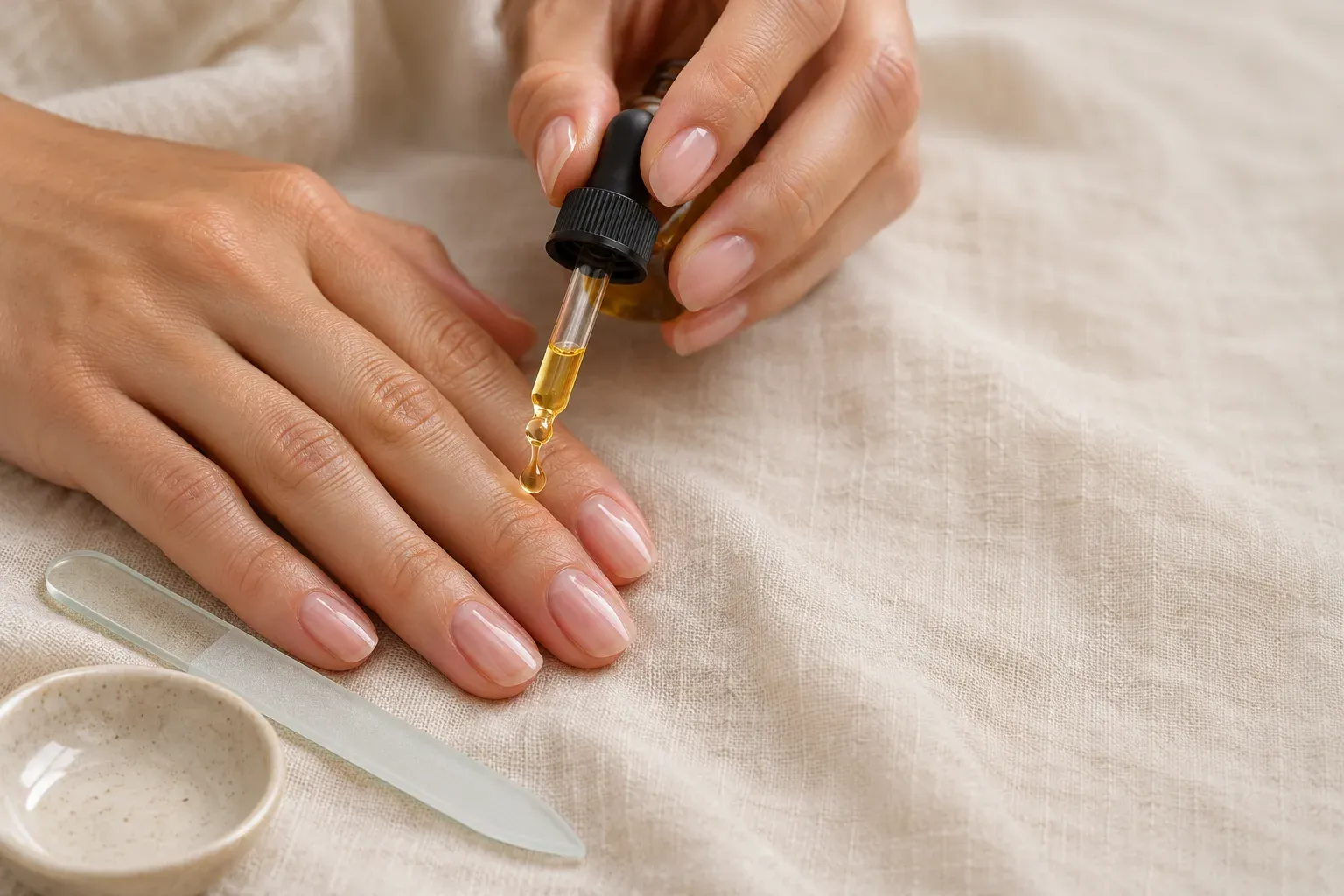
Inspiration 6 мин четене
Modern variations of the French manicure
Art House Nails
· Updated 23 November 2026
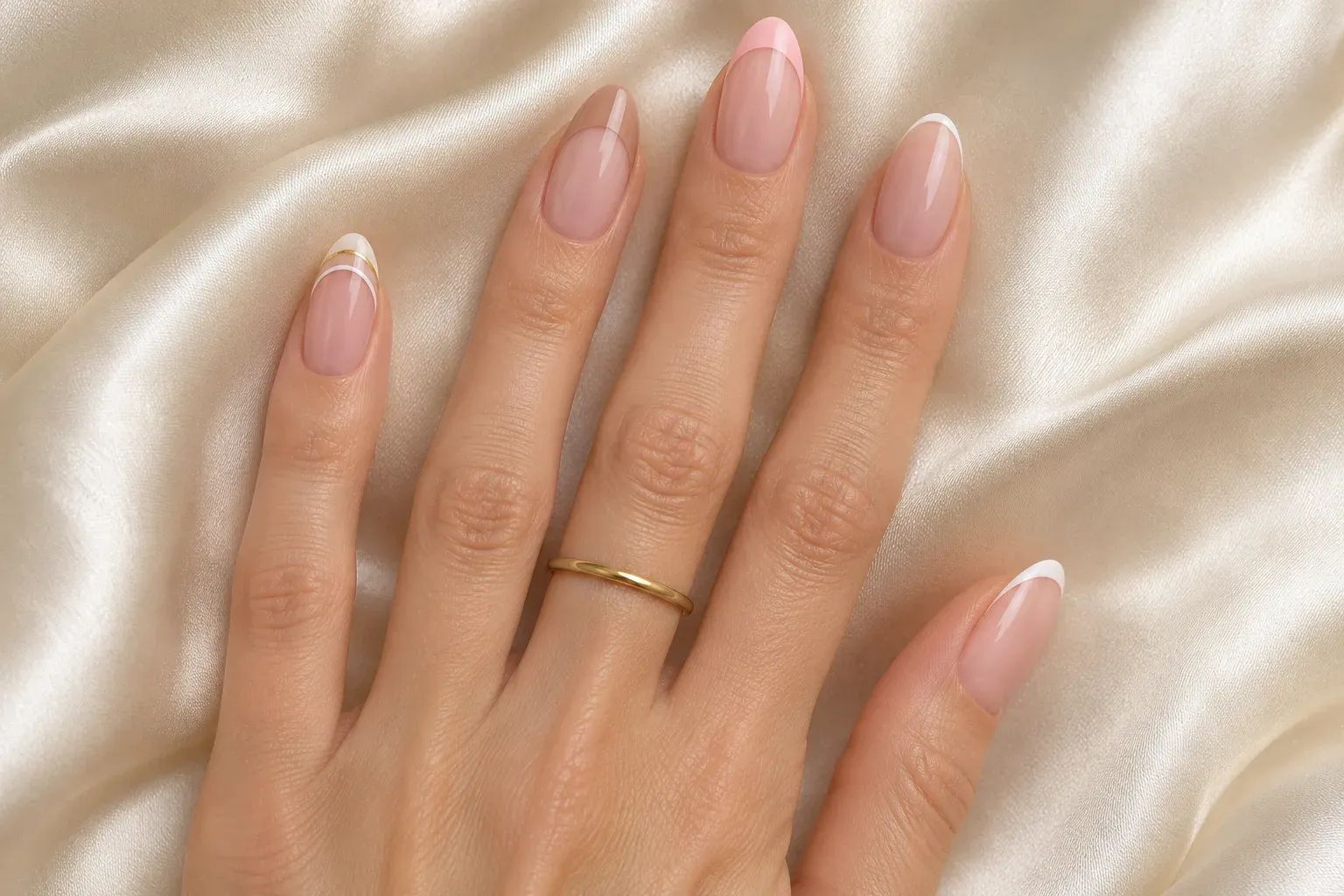
From micro and deep French to ombre, chevron and chrome tips: 11 modern variations, how to pick a base for your skin tone and how to make your manicure last longer.
The French manicure is one of those choices that never really goes out of style: a soft base, a white tip and a clean line that makes hands look cared for without anything extra. It became the shorthand for polished, classic nails back in the 1970s, but today the name covers dozens of looks, from an almost invisible fine line to coloured, double and asymmetric tips. Here are the most popular variations, who they suit, and what is worth knowing before you book.
French manicure variations
Classic French
A sheer pink or beige base with a white tip that follows the natural line of the free edge. It looks clean and works anywhere - at the office, at a wedding, at a job interview. It sits best on oval, almond or soft square nails of medium length, where the smile line has room to be drawn evenly.
Micro French
A very thin white line right along the edge of the nail. It is the most discreet option and a great fit for short nails or for anyone who works a lot with their hands. It suits almost every shape, especially short ovals and squares with rounded corners.
Deep French
The smile line sits lower, closer to the base of the nail, so the white covers a larger part of it. The effect is bolder and more modern. This look needs length: extensions or natural nails with a well-grown free edge, in almond, ballerina or stiletto shapes. On very short nails a deep line visually shortens the nail bed, so we would not recommend it there.
Coloured and pastel French
The white tip is swapped for a colour: pastel pink, lavender, mint or baby blue for spring and summer, or burgundy, deep green or black for a bolder evening look. All ten nails can share one colour, or each can wear a different shade from the same family. It is an easy way to add colour without the nails looking busy, and rich dark shades look most elegant on almond and oval nails.
Double French
A second thin line is painted just below the main tip, parallel to it, in the same colour, a contrasting one or with a little shimmer. The result is graphic and slightly retro. You need at least medium length so the two lines have some breathing room.
Reverse French
The accent moves to the base of the nail: a thin arc or half-moon follows the cuticle line, and the rest of the nail is in the base colour. Its big advantage is that it does not depend on free edge length, so it works on short nails too. It does call for careful cuticle work, because that is where all the attention goes.
V-shaped (chevron) French
Instead of a curve, the tip is shaped like a V, with the point facing the cuticle. This line makes the nail look longer and slimmer, so it is especially flattering on almond and stiletto shapes.
Side (asymmetric) French
The line runs diagonally or covers just one corner of the nail. It looks modern and a little unexpected, even more so when the two hands mirror each other. It works well on square and almond nails of medium length.
Ombre or baby boomer
Instead of a sharp edge, the white fades softly into a nude or pink base. The result is gentle and natural, which is why it is a favourite for weddings, proms and photo shoots. The gradient needs space, so it looks best on medium and long nails, often done with extensions.
Glitter or chrome-tip French
The tip is covered with fine glitter, pearl or chrome powder in silver, gold or rose gold. The classic turns festive without losing its clean look, which makes it a great pick for the holiday season, birthdays and evening events.
French with minimal art
A classic base plus one small detail: a dot at the base of the nail, a fine gold line along the smile, a tiny heart or star on one or two fingers. If you want something personal without giving up the classic, this is your version.
Choosing the base colour for your skin tone
The base is half of a French manicure. It should look like a natural extension of your skin rather than a separate colour.
- Sheer pink - suits fair skin with pink or neutral undertones and gives the classic "clean" look.
- Milky base - soft and slightly opaque, it hides spots and unevenness on the nail plate and looks modern on almost every skin tone.
- Nude and beige - warm beige and peach shades suit olive and tanned skin, while deeper skin tones look best with a richer caramel or cocoa base that will not turn greyish.
If you are unsure, ask your nail technician to put two or three samples on your nail and look at them in daylight.
Gel polish or extensions
- Gel polish on natural nails - a good fit if you have a visible free edge, because a clean smile line needs a bit of length to be drawn on. If your nails are very short, choose a micro French or a reverse French while they grow.
- Extensions - they add length and shape your natural nail may not have, and they open the door to a deep French, ombre and V-shaped lines on long almond or ballerina nails. They are also a good solution when your own nails are thin and break often.
How to make your French manicure last
The white tip is the most vulnerable part, because that is exactly where nails knock against things and wear down.
- Do not use your nails as tools for opening cans, scraping off labels or prying open key rings.
- Wear gloves when cleaning or washing up. Light finishes pick up stains more easily, for example from hair dye, self-tanner or spices such as turmeric.
- Apply cuticle oil every day to keep the skin around the nail soft and the manicure looking fresh.
- Plan a refill or a new manicure every 3-4 weeks. With a French, regrowth shows sooner than with a solid colour, especially on a more opaque base.
- Do not peel or pick off the coating yourself, so you do not thin out the nail plate.
Quick tips:
- On short nails, go for a micro or reverse French.
- The longer the nail, the deeper the smile line can be.
- Bring a photo of the look you love, so you and your nail technician are on the same page.
- Pick a base that matches your skin, not the swatch in the catalogue.
The French manicure proves that a classic can be discreet, bold, colourful or festive. The specialists at Art House Nails can create any of these variations and help you choose the shape and base that suit your hands. Browse our gallery for inspiration and pick your French.