Nail care 6 мин четене
Essential rules for healthy, beautiful nails
Art House Nails
· Updated 23 November 2026
How to care for your natural nails every day: cuticles, moisture, filing the right way and removing gel polish safely. Practical advice from a nail technician.
A beautiful manicure starts with a healthy natural nail. Gel polish and extensions can transform your hands, but they look their best and last longest on nails that are looked after between salon visits too. Here are the tips we give our clients most often: what to do every day, what to avoid, and why it matters.
What you should know about your nails
The nail plate is made of keratin, the same protein that makes up your hair and the outer layer of your skin. It grows from the matrix, which sits hidden under the skin at the base of the nail. The part you can see is no longer living tissue, so it cannot "heal". A damaged section can only grow out and be trimmed away.
Fingernails grow on average about 3 mm a month, which means a nail replaces itself completely in roughly 4-6 months. Toenails are much slower and take a year or more. That is also why good care does not show results within a week: you will notice the first changes after a few weeks, and a completely new nail only after months.
Cuticles: protect them, don't cut them
The cuticle is the thin layer of skin at the base of the nail. It seals the gap between the skin and the nail plate and stops bacteria and fungi from reaching the matrix. Cutting it removes that barrier. The skin grows back rougher, cracks more easily, and the risk of inflammation goes up.
Here is how to care for your cuticles properly:
- Gently push them back once a week, after a shower or bath when the skin is soft. Use a wooden (orange) stick or a silicone pusher, and don't press hard.
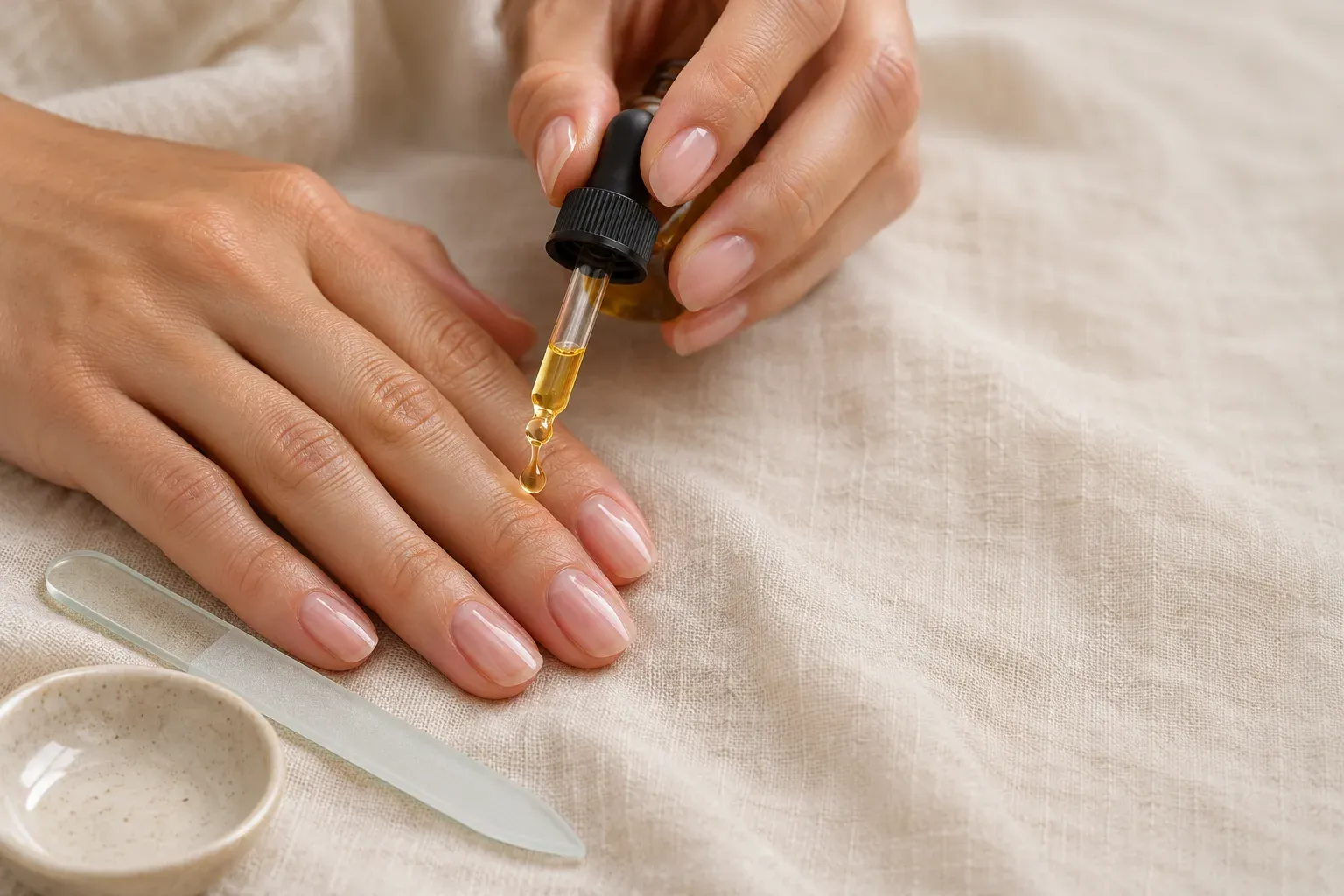
- Apply cuticle oil every day, one drop per nail, and massage it in with small circular movements. Just before bed is the easiest time to make it a habit.
- If you have hangnails, trim only the loose, dry piece with clean, sharp nippers. Never pull or bite them, as that tears the living skin underneath.
Moisture is the most important habit
Nails absorb water and swell, then dry out and shrink again. When that happens many times a day, the layers of the nail plate gradually separate and the tips start to peel. So dry, brittle nails are often not a sign that you are "missing something", but the result of too much water and detergent.
- Wear rubber or nitrile gloves when washing dishes, cleaning or handling household products. If your hands sweat inside them, wear thin cotton gloves underneath.
- After every hand wash, dry your hands well, including around the nails, and apply hand cream.
- In the evening, use a richer layer of cream and oil. Massage it into the nail itself, not just the surrounding skin.
- In the colder months, wear gloves outdoors. Cold and dry air dehydrate the skin around the nails surprisingly fast.
How to file the right way
A nail file is your most useful tool, as long as you use it correctly.
- For natural nails, choose a fine file with a 180-240 grit. Coarser files (100-150 grit) are made for artificial nails and damage the natural plate. A glass file is also a good choice. Metal files are best avoided because they leave a jagged edge.
- File dry nails. A wet nail is softer and splits more easily.
- Move the file in one direction, from the side towards the centre, rather than sawing back and forth. Filing both ways loosens the layers and leads to split tips.
- Don't file deep into the side corners. The sides support the nail, and once they are gone it breaks more easily.
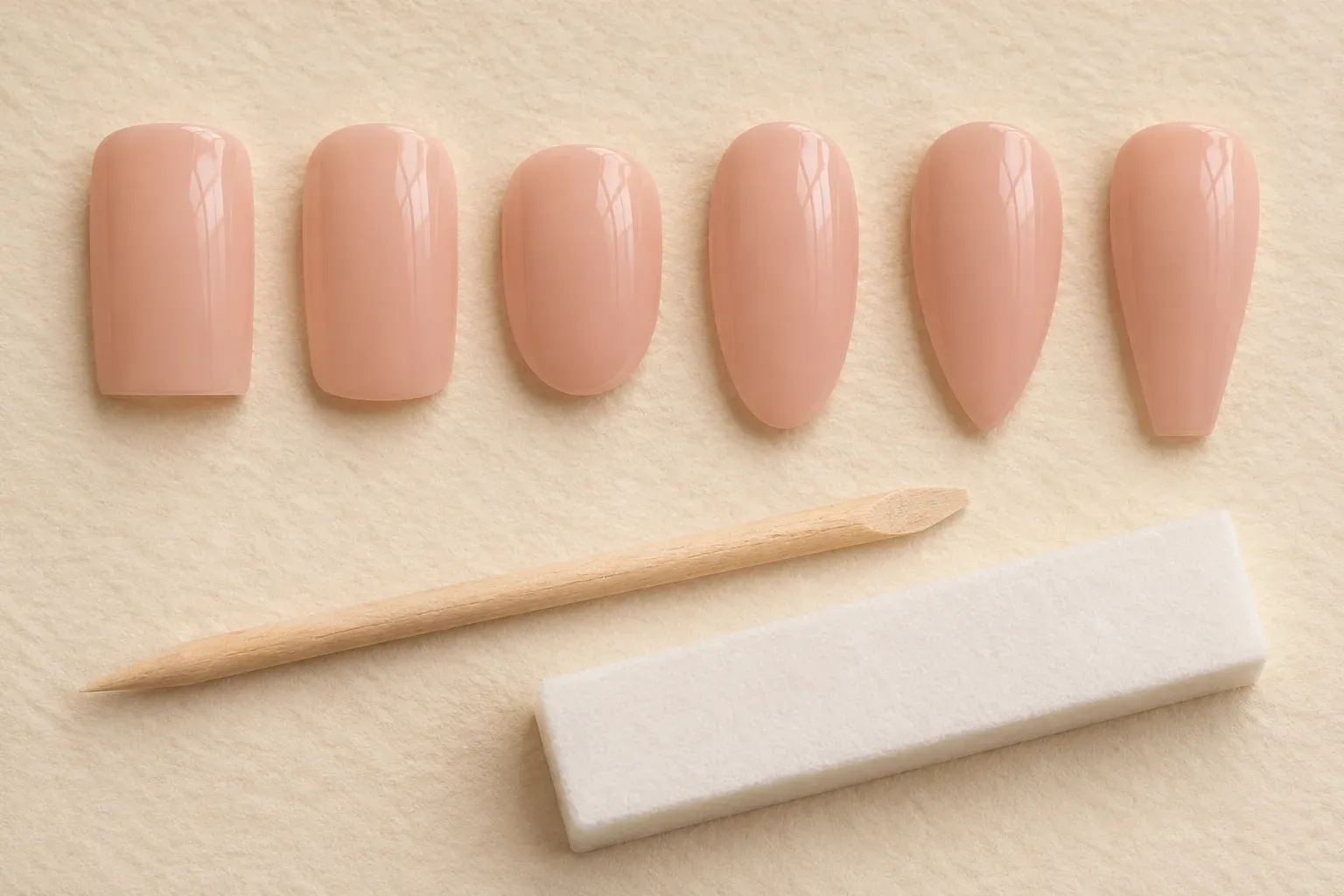
Shape matters too. Soft square and oval shapes catch less often than pointed tips and hold up better to everyday use. Cut toenails straight across, without rounding the corners, to help prevent ingrown nails.
A buffer adds shine, but it also thins the nail plate. Use it rarely and lightly, only to smooth out ridges, never as a weekly routine.
Polish, gel polish and remover
- Always apply a base coat before coloured polish. It protects the nail from staining, especially with dark and intense shades.
- Acetone dries out the nail and the skin around it. Use remover only as much as you need, don't scrub hard, and always follow with oil and cream.
- Never peel or pick off gel polish. The coating takes the top layers of the nail plate with it, leaving your nails thin and sensitive for weeks. Gel polish and extensions should be removed properly, ideally by a nail technician.
- Nails don't "breathe" through polish; they get what they need from the blood supply beneath them. But if they have been thinned by careless removal, a few weeks of nourishing care and a protective base coat will help them grow out stronger.
Diet and habits matter as well
The nail is built from protein, so a varied diet with enough protein, iron and zinc is a good foundation: eggs, fish, meat, pulses, nuts and vegetables. Biotin is often recommended, but the evidence for it is limited and mostly concerns people with very brittle nails. Talk to a doctor before starting any supplement, especially if you have blood tests coming up, because biotin can distort the results of some of them.
Everyday habits often count for more than anything else:
- Don't use your nails as tools for opening cans, scraping off labels or lifting lids.
- Don't bite your nails or the skin around them.
- If your work is hard on your hands, keep your nails shorter. A short, healthy nail looks better than a long, broken one.
When to see a specialist
Most nail problems come from dryness, everyday knocks or improper removal of a coating, and they improve with the right care. Some changes, however, should be checked by a dermatologist:
- a lasting change in colour, such as a dark lengthwise streak, yellowing or spots that don't grow out;
- thickening, crumbling, or the nail lifting away from the nail bed;
- pain, swelling, redness or pus around the nail;
- a change in the shape of the nail that doesn't go away.
A nail technician cannot make a diagnosis, but a good one will tell you if they notice something that is worth showing a doctor.
Quick tips:
- Cuticle oil every evening, hand cream after every wash
- Gloves for cleaning and washing up
- A 180-240 grit file, one direction, dry nails only
- Push cuticles back, never cut them
- Never peel off gel polish
- Your nails are not tools
Healthy nails don't take much time, they take consistency. A few minutes of care every evening does more than an expensive product used once a month. And a professional manicure every 3-4 weeks keeps the shape, cuticles and finish in good condition. If you'd like a fresh start, our specialists are happy to help: take a look at our services and choose what your nails need.