Nail care 6 мин четене
Winter nail care: how to keep nails and cuticles healthy
By Plamena, Founder and manager
· Updated 23 November 2026
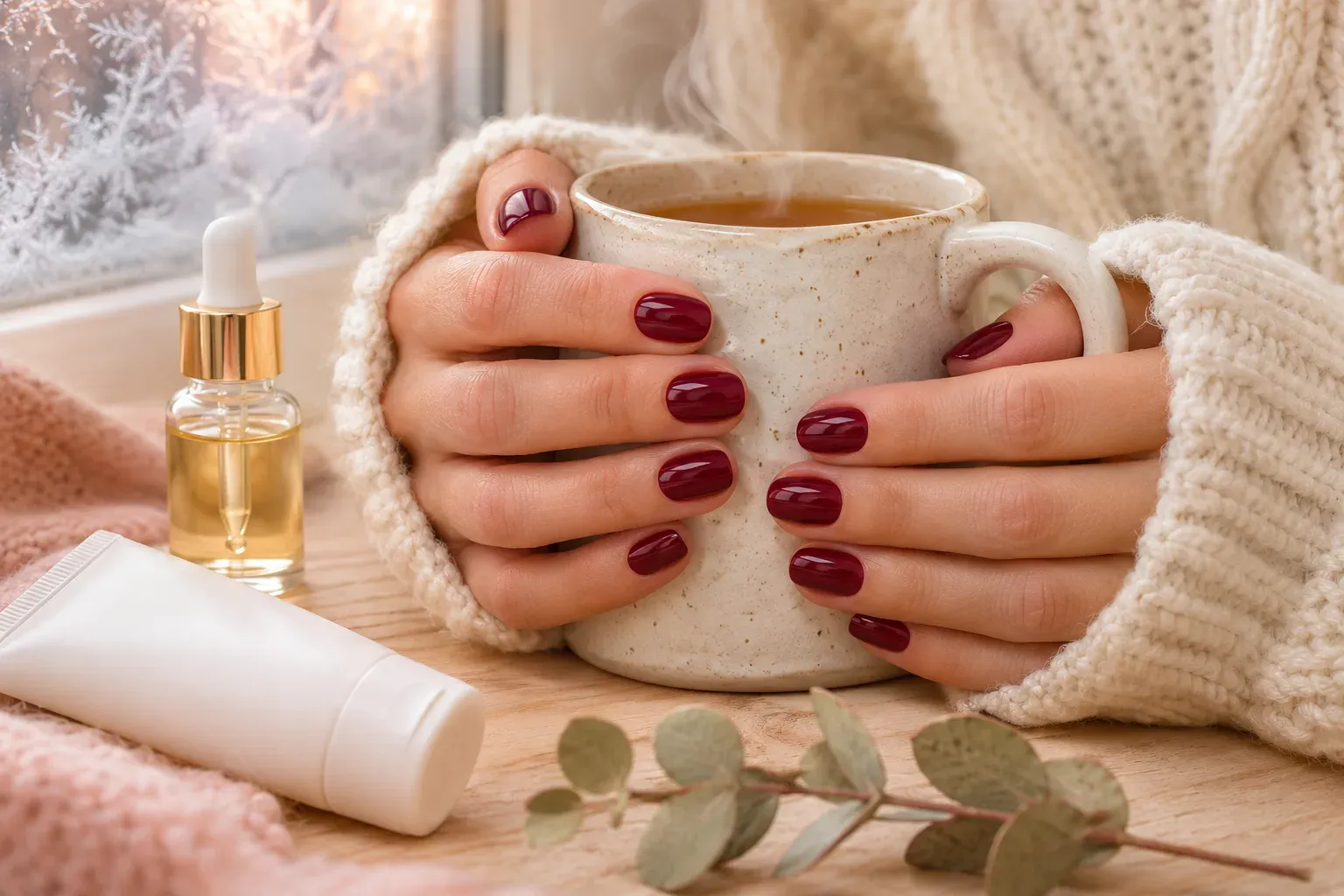
Cold air, dry heating and frequent hand washing leave nails brittle and cuticles cracked. Here is how to protect them all winter: oil, cream, gloves and proper gel removal.
If your nails start splitting in winter and the skin around them cracks, you are not alone. At the salon we see it every year as soon as the cold arrives. The good news is that a few simple habits can get your hands and nails through the season in good shape.
Why winter is so hard on nails
The nail plate is made of thin layers of keratin held together with a little water and natural oils. When it loses them, it turns brittle and starts to peel at the tip. In winter several things work against it at once:
- Cold and wind outside. In Varna the wind off the sea makes the cold bite harder and dries the skin on your hands quickly.
- Dry air indoors. Heating and air conditioning dry out the air, so your skin loses moisture all day.
- Frequent washing and sanitiser. Soap strips the skin's natural oils, and the alcohol in sanitiser dries it further.
- Hot water. It washes away the skin's protective layer faster than lukewarm water.
- Sudden temperature changes, from the cold street into a warm room and back, several times a day.
When nails get wet and dry out over and over, their layers swell and shrink and the bond between them weakens. That is how peeling starts. The cuticles dry out too, then crack, and hangnails appear.
Moisture every day: oil and cream
Cuticle oil
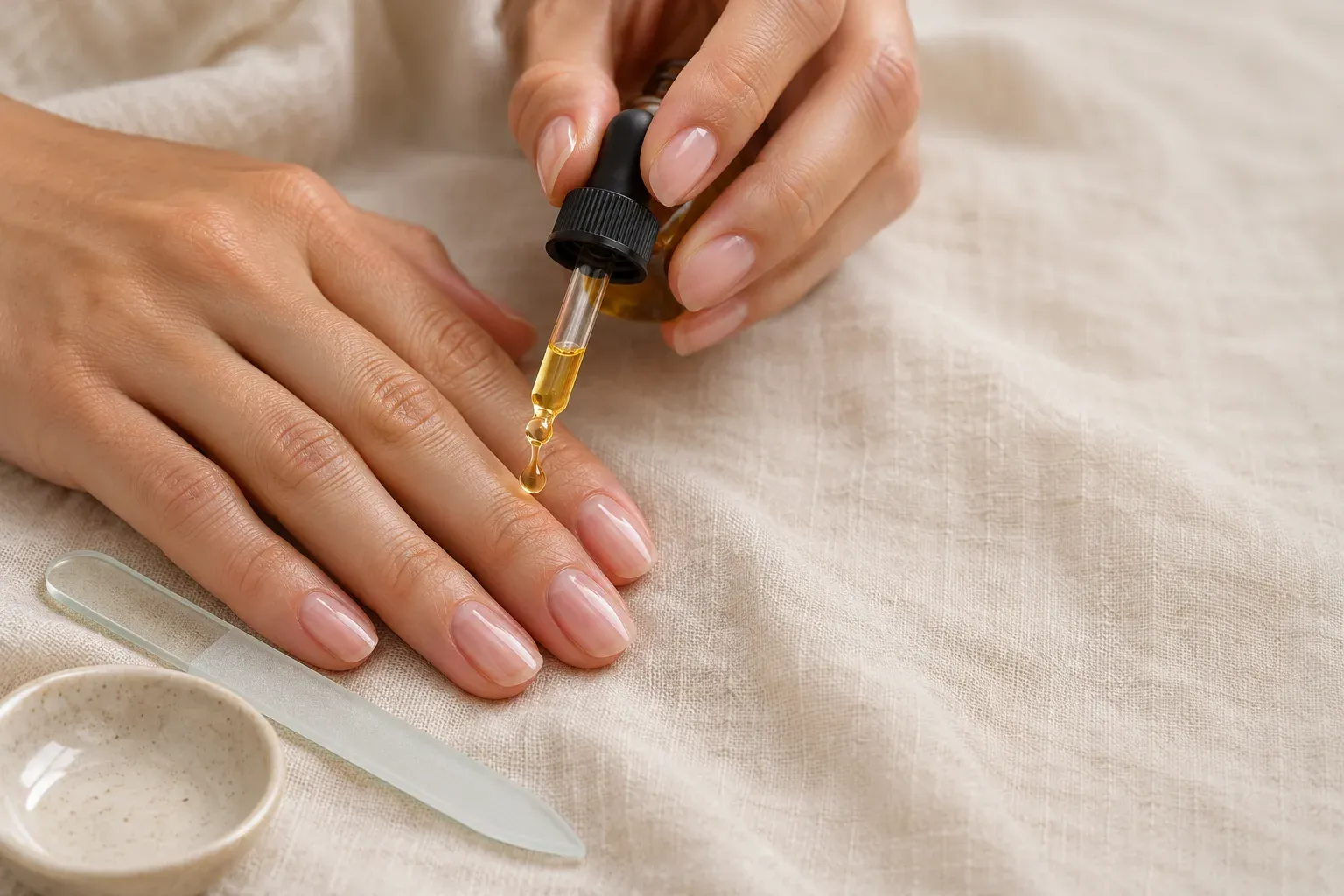
If you pick only one winter habit, make it this one. Apply a drop of cuticle oil to each nail at least once a day, ideally in the evening, and massage it into the cuticle and the nail plate for a few seconds. Jojoba and sweet almond oil are good bases: jojoba is close to the skin's own oils and absorbs quickly, while almond oil is gentle and nourishing. If you have a nut allergy, choose an almond-free oil. Keep the bottle by the bed or on your desk, where you will not forget it.
Hand cream after every wash
Apply hand cream every time you wash your hands, and after sanitiser once it has dried. Pat your hands dry first, including around the nails, and work the cream into the cuticles too. In winter switch to a richer texture: creams with glycerin, shea butter, ceramides or urea hold moisture longer than light gels.
An overnight routine
Once or twice a week, or every night if your hands are very dry, apply a thick layer of cream, add oil to the cuticles and wear thin cotton gloves to bed. The gloves keep the product on your skin, and in the morning your hands feel noticeably softer.
Protection outdoors and at home
- Wear gloves outside whenever it is cold, not only on frosty days. Wind dries the skin even above freezing.
- Rubber gloves for dishes and cleaning. Water and detergents are among the most common reasons nails peel. With sensitive skin, wear thin cotton gloves underneath.
- Lukewarm, not hot, water for your hands and the dishes, and shorter hot showers.
- A humidifier at home, especially in the bedroom. If condensation forms on the windows, the air is humid enough; in Varna flats extra moisture quickly means mould.
Shorter nails and careful polish removal
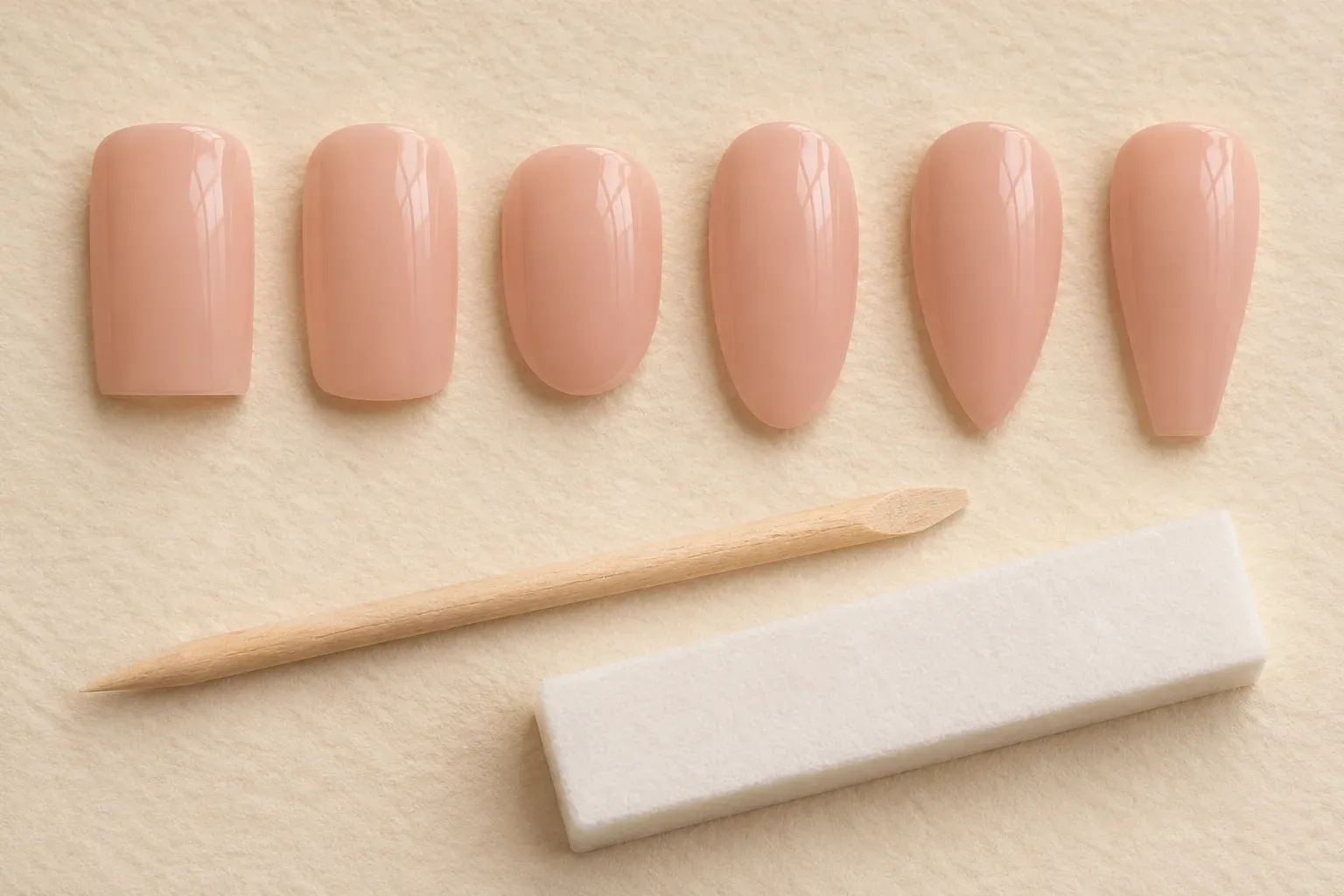
Dry nails break more easily, and a long free edge takes the first knock. In winter keep them a little shorter, rounded or oval, with no sharp corners to catch on clothes. File in one direction with a fine file: it is gentler than clippers, which squeeze the nail plate.
Do not peel off gel polish. When you lift it off, it takes the top layers of the nail plate with it, leaving your nails thin, rough and sensitive just when they recover most slowly. Gel polish should be removed properly, by filing off the top coat and dissolving or carefully filing away the rest, and the safest option is to leave it to a professional.
For regular polish, use an acetone-free remover where you can, as it is gentler. Whatever you use, wash your hands afterwards and apply oil and cream, because every remover dries the skin.
Hangnails and cracked cuticles
A hangnail is a small strip of dry skin lifting at the side of the nail. Pulling it almost always tears off more skin than it should and leaves a small wound where infection can get in. Instead:
- Soften the skin with warm water or a drop of oil.
- Trim the hangnail at its base with clean, sharp cuticle nippers, disinfected before and after use.
- Apply oil or cream, and keep any small cut clean until it heals.
Do not cut your cuticles too deep at home, and do not bite the skin around your nails. The cuticle protects the area the nail grows from.
Care from within: water and diet
Creams work from the outside, but nails grow from what your body gives them. Drink enough water during the day, even when you do not feel thirsty, which is common in the cold months. Eat a varied diet with enough protein (eggs, fish, beans and lentils), foods with iron and zinc (meat, nuts, seeds, leafy greens) and healthy fats.
Be cautious with supplements. Brittle nails can have many causes, and a "nail" supplement is not always the answer, so talk to your doctor first. This matters especially for high-dose biotin, which can affect the results of some blood tests.
Winter manicure: colours and protection
Winter is the season for deep, warm shades:
- rich burgundy and wine red, a classic around the holidays;
- chocolate brown, from milk chocolate to almost black;
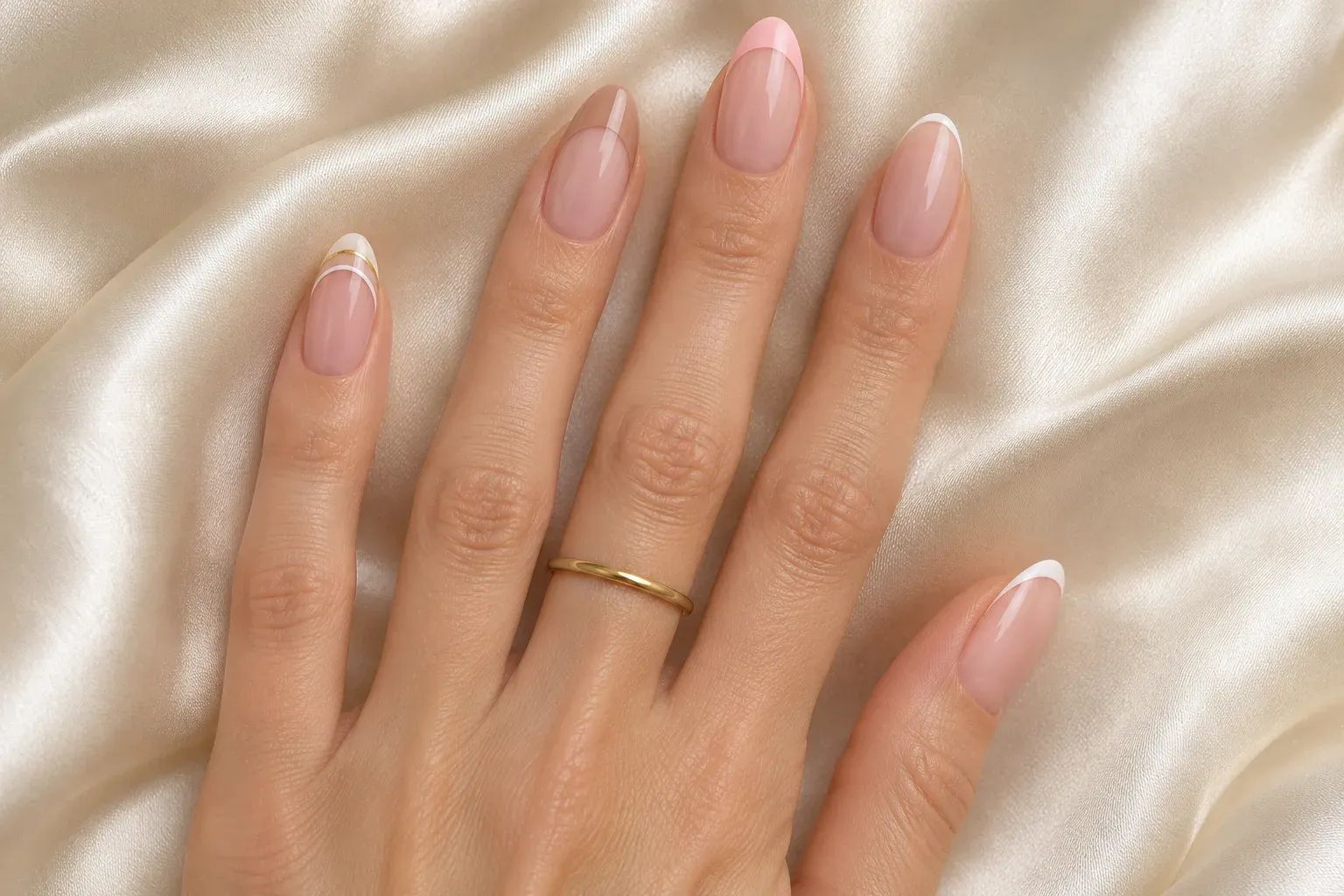
- nude with a fine shimmer, elegant every day and festive enough for a night out.
Gel polish has a practical side too. On thin, weak natural nails it adds a sturdy protective layer that reduces breaking and peeling at the tip and shields the nail plate from constant contact with water and cleaning products. The condition is that it is applied and removed properly, and that you keep up with cuticle oil between appointments.
When to see a specialist
Most winter nail problems clear up with good care. See a dermatologist or your GP if you notice:
- a lasting change in nail colour, such as a dark streak, yellowing or darkening;
- thickening, a change in shape, or the nail lifting from the nail bed;
- pain, redness, swelling or pus around the nail;
- cracks in the skin that bleed and do not heal despite care.
A nail technician may spot the change, but diagnosis and treatment are a doctor's job.
Quick tips:
- Cuticle oil every evening, with a short massage
- Hand cream after every wash
- Gloves outside and rubber gloves for the dishes
- Lukewarm water instead of hot
- Shorter, rounded nails until spring
- Never peel off gel polish or tear hangnails
Winter care does not call for expensive products, just consistency: a few minutes a day is enough. To keep your cuticles and nails in shape all season, a professional manicure every 3-4 weeks is a good complement to your care at home, and you can book an appointment online whenever it suits you.